
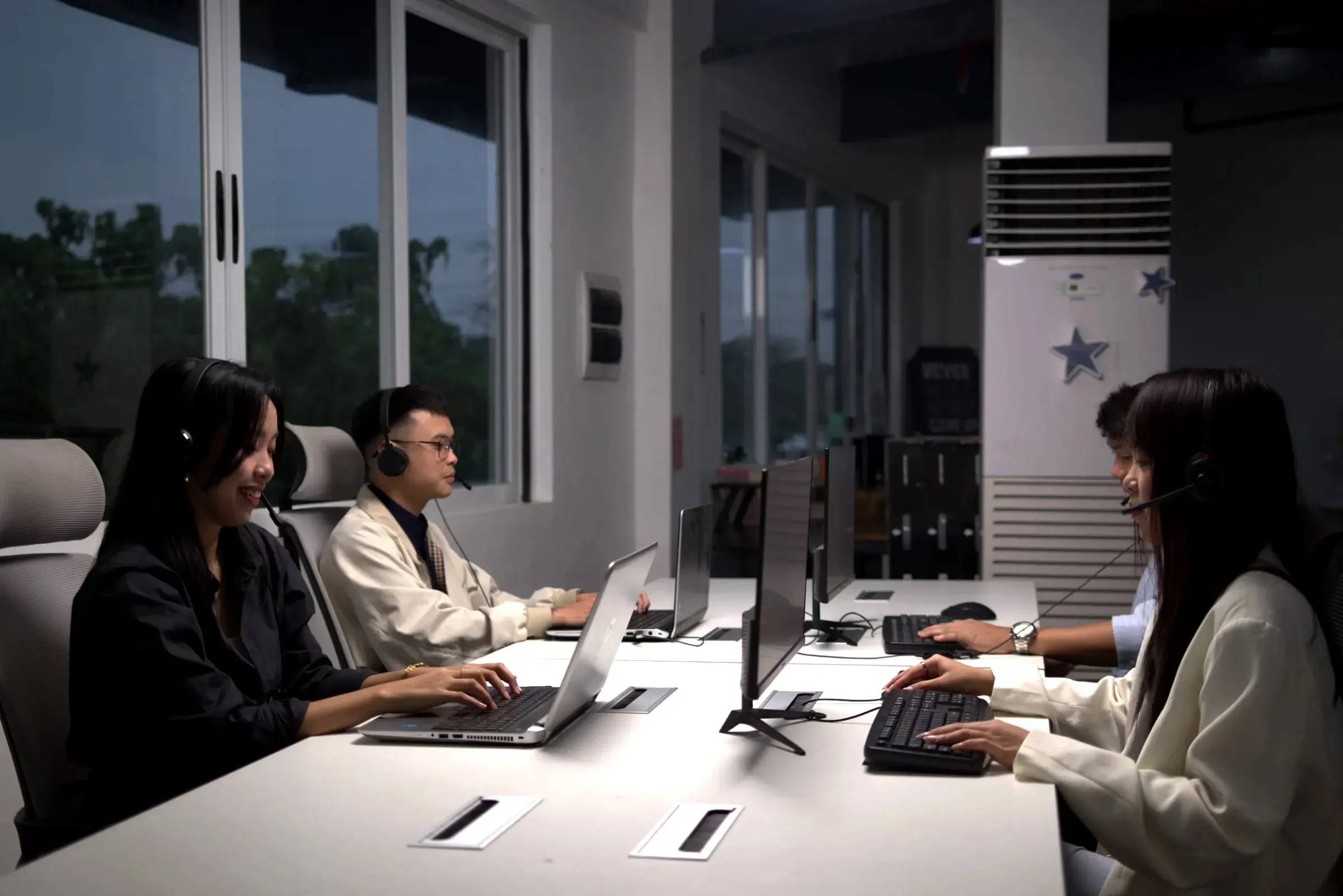
If you have ever hired a freelancer, handed over important work, and then spent more time chasing updates than getting results, you already know why office-based virtual assistants matter. Remote support only works when there is structure behind it. Without that structure, you end up buying back your time with more supervision, more rework, and more frustration.
That is the real difference. An office-based virtual assistant isn’t just someone who works remotely. They work inside a managed environment built for accountability, training, and consistent output. For a company that needs dependable support, that matters more than the hourly rate.
Why office-based support stands out
A home-based setup can work. There are talented independent contractors and experienced remote professionals who deliver strong results. But if your business depends on reliable execution in customer service, admin, sales support, bookkeeping, or operations, the risk changes quickly.
When your VA works from an office, you aren’t relying on one person to manage everything alone. You get a system: supervision, attendance oversight, a stable workspace, onboarding, and quality checks. For a US business owner or operations leader, that removes many of the variables that slow work down.
The main benefit is simple: delegation becomes easier to trust.
1. Reliability is higher because oversight is built in
One of the biggest problems with freelancers and loosely managed remote hires is inconsistency. They may be excellent one week and unavailable the next. They may communicate well at the start, then become harder to reach once the work settles into a routine.
Office-based virtual assistants work in a more controlled setting. Attendance is visible. Supervisors can step in when performance drops. There is a layer of management between your business and the daily execution of tasks. That doesn’t guarantee perfection, but it creates a much stronger foundation for consistency.
If you’re trying to protect service levels or keep internal workflows on track, that matters. Reliability isn’t a nice extra. It’s the baseline.
2. Training and onboarding are more structured
A common outsourcing mistake is assuming a good hire can simply figure things out. Even experienced assistants need context: your tools, your expectations, how you like to communicate, and what “done” looks like.
With an office-based model, onboarding is more formal. There is a process for aligning your assistant with your workflow, followed by ongoing coaching, refresher training, and performance feedback. Your assistant isn’t left to interpret your instructions alone.
This benefit gets less attention than it deserves, but it has a direct effect on productivity. Better onboarding shortens the ramp-up period. Better training reduces avoidable mistakes. Over time, you get steadier support and spend less of your own time managing it.
3. Communication is faster and clearer
Communication problems rarely start as major failures. They show up as small delays, half-finished updates, unclear handoffs, or tasks that sit untouched because no one checked in. Over a month, those small issues drag on the whole business.
In an office, there is more discipline around communication. Supervisors help keep work moving, and escalations are easier. If your assistant needs clarification or hits a blocker, help is usually a few desks away.
That matters most for businesses that move quickly. If your calendar is full, your customers expect fast replies, or your back-office work touches revenue, you need communication that keeps momentum.
4. Quality control is stronger than in a solo contractor model
A solo freelancer is responsible for their own quality control. Some are excellent at it. Some are not. The problem is that you often find out which kind you hired after errors reach your customers, reports, schedule, or sales pipeline.
Office-based virtual assistants work inside a delivery model with review, oversight, and accountability. That improves accuracy in work such as CRM updates, inbox management, bookkeeping support, appointment scheduling, customer support, and outbound follow-up.
Quality control is especially valuable when the role is customer-facing or process-heavy. If your assistant answers calls, replies to leads, updates records, or handles recurring admin work, you want standards that are reinforced, not assumed.
5. Fewer distractions mean more productive hours
Not all remote work environments are equal. A home setup can be productive, but it can also be unpredictable. Internet outages, power interruptions, background noise, family interruptions, and equipment problems all cut into output.
An office is designed for work. That sounds obvious, but it has real value. Stable internet and power and a dedicated workspace support focus and continuity, so your assistant spends more time doing the work and less time working around avoidable obstacles.
For US companies outsourcing core support functions, this is one of the clearest operational advantages. You aren’t just hiring a person. You’re getting a work environment built to help that person perform.
6. Hiring risk is lower with a managed model
Every hire carries risk. Better screening, stronger processes, and clear performance management reduce it, and that is where office-based providers have an edge over freelance marketplaces and one-off placements.
A managed, office-based model includes recruiting, vetting, matching, and performance oversight. Instead of sorting through dozens of applicants yourself, you start with someone selected for skill fit, communication ability, and personality. That saves time at the start and supports retention later.
It also means you aren’t on your own if something is off. There is a team that can step in with coaching, retraining, and adjustments. That is a big difference from hiring a contractor directly and hoping the relationship works out.
7. Office-based support makes long-term delegation possible
Some business owners use VAs for overflow work. Others need a long-term partner who can own recurring tasks and become part of the team’s rhythm. If you’re in the second group, office-based support makes more sense.
Long-term delegation depends on consistency: whether the person shows up, follows the process, improves over time, and stays aligned with your business. A structured environment makes that much easier to sustain.
This is where the model matters more than the title. Any virtual assistant can handle admin tasks. The right office-based assistant can also support growth by protecting executive time, keeping customer response standards high, and keeping repeatable workflows on track.
8. Cost efficiency looks better when you look past the hourly rate
A cheaper hourly rate isn’t always a lower cost. If you spend hours correcting mistakes, repeating instructions, replacing underperformers, or stepping back into tasks you thought you had delegated, the true cost rises fast.
Office-based virtual assistants often deliver better value because they cut that waste. You spend less time on attendance problems, communication breakdowns, and rebuilding processes around unreliable support. You get stronger output with less of your involvement.
It depends on the role, though. For a one-time creative task or a short, highly specialized project, a freelancer may be the better fit. For ongoing operational support that touches daily performance, structure usually beats flexibility.
9. Your customers get a better experience
Customers don’t care whether your team is in-house or offshore. They care whether calls are answered, emails are returned, orders are handled correctly, and issues are resolved without friction.
That is why the benefits of office-based virtual assistants go well beyond internal admin. Dependable support protects the customer experience: faster responses, stronger follow-through, and more consistent service.
For businesses in real estate, e-commerce, consulting, construction, staffing, and sales, that consistency affects retention and revenue. Missed calls, delayed updates, and sloppy follow-up aren’t small problems. They’re conversion problems.
When office-based support makes the most sense
If your current setup feels fragile, you probably need more than a contractor. You need a support model with management behind it. Office-based virtual assistants are the stronger fit when the work is ongoing, process-driven, customer-facing, or important enough that missed details have real consequences.
Not every business needs the same setup. A founder who needs a few hours of miscellaneous help may not need a managed staffing partner yet. But if you want repeatable delegation, less supervision on your part, and a support layer your business can rely on, the office-based model is the smarter move.
Archers Contact Solutions is built around that idea. Our VAs work full-time from our office in Dasmariñas, Cavite, in the Philippines, with daily supervision, quality checks, and continuous skills training. The value isn’t simply remote talent from the Philippines. It’s the structure, supervision, and accountability that make delegation work.
The best outsourcing decisions aren’t based on who is cheapest or fastest to hire. They’re based on what lets your business run with fewer interruptions, less rework, and more confidence every day.
Want to see what an office-based VA could take off your plate? Book a free 15-minute discovery call. We’ll learn your goals, workflow, and work style, and there’s no obligation.